Garda, first yes to the closed number.
18 April 2023
A voice out of the chorus. Ivan De Beni, president of Federalberghi Garda Veneto and former mayor of Bardolino, is one of the few to defend Bolzano's initiative to put a cap on overnight stays. And he relaunches: 'Of over-tourism one dies. The destination is like a container. If it continues to be filled at a certain point it overflows, it bursts. In this case the location is no longer attractive, it becomes a second or third choice and the tourist ends up going to other shores. This creates an oversupply of accommodation and the consequent selling off of rooms'.
Is there a model to take as an example to change course?
More than one. In the meantime, it becomes interesting to monitor what will happen in Alto Adige with the decision to put a closed number on overnight stays. What better occasion to understand how the tourism market is evolving? The example is Hawaii, which froze revenue. They saw that it was a boomerang for the tourist himself and for those who live there; the destination went under stress. By putting a stop to it they started to reap the benefits.
What direction is Lake Garda taking?
Benaco understood as the three shores has great tourist-economic appeal today. It is a first choice destination. Abroad there is great interest from tour operators and in the coming years we will certainly see a steady increase in admissions.
Who is responsible for defining the development of tourism in the Garda area?
An interesting role for the Veneto side could be played by the newly founded 'Destination Verona & Garda Foundation', the operational arm of the two Dmo Verona and Lake Garda Veneto. It brings together the municipalities and the Verona Chamber of Commerce. If, on the other hand, we think as a lake system, an interesting role could be played by the Garda Community, which unites the three shores and has already shown great sensitivity on these issues over the years. Another body could be the single Garda that brings together the three consortia of Veneto, Lombardy and Trentino. We have the tools, we just need to use them.
Do you feel the need to launch a master plan to 'design' the Garda of the next twenty years?
That would be ideal. Our area has a varied tourist offer and it is interesting to gather the needs and directions of the various players and thus have the tools and data on which to make important decisions.
Municipalities often act autonomously. Isn't there a risk that everyone wants more only for themselves?
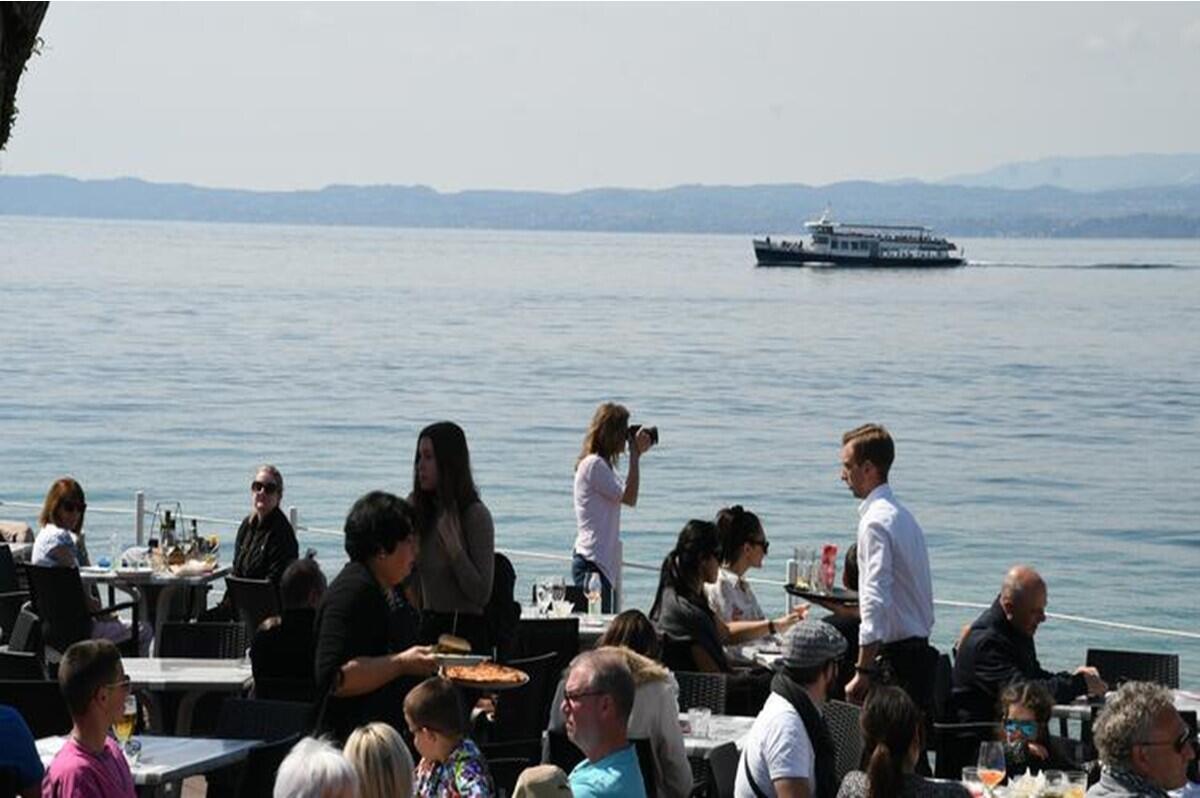
That is exactly what is happening. Decisions are being made in a patchwork. Some invest more and some less. We have examples of small municipalities that have undertaken a massive expansion and construction of new beds in recent years. A small community cannot have five times the accommodation capacity of its residents in the middle of summer. That town, and not only the tourist, is under stress. Those who come here want a quality environment.
Can tourists suffer from overcrowding?
Yes. The risk is not only that our guests do not return but that they get bad publicity at home. According to statistics, one tourist who had a bad time on holiday negatively influences seven other hypothetical customers. Not only does he not return.
Is the lake preparing for the generational change of the tourist?
No, or rather very slowly. Young people choose and favour environmentally sustainable destinations. Unfortunately there is no common planning and very little is being done on these issues. In our own small way we are directing our members (there are 400 hotels registered with Federalberghi Garda Veneto ed.) to eliminate the use of plastic, to follow small rules to save energy, and not to waste water.
In conclusion, what should be done to avoid tourist overcrowding?
We need a change of course: stop all new hotel and accommodation facilities to avoid land consumption and new beds. We must stop and manage the receptivity we have.
From 'L'Arena' of 15/4/2023. Full article here
Previous