WWF, tons of waste recovered from Lake Garda between 2022 and 2023
11 June 2024
The rubbish we see on the beaches arriving from the lake is only a small part of the problem, much of the waste that enters the ecosystem unfortunately sinks.
"In Garda there are still many places polluted by waste," says Paolo Zanollo, WWF's contact person for Brescia, "especially in the port areas and those adjacent to inhabited areas. There is waste that enters accidentally, waste that is abandoned voluntarily, and waste that should go to purifiers such as sewers and instead ends up in the lake due to a still poor or lack of purification".
25 tonnes collected, including special and hazardous waste
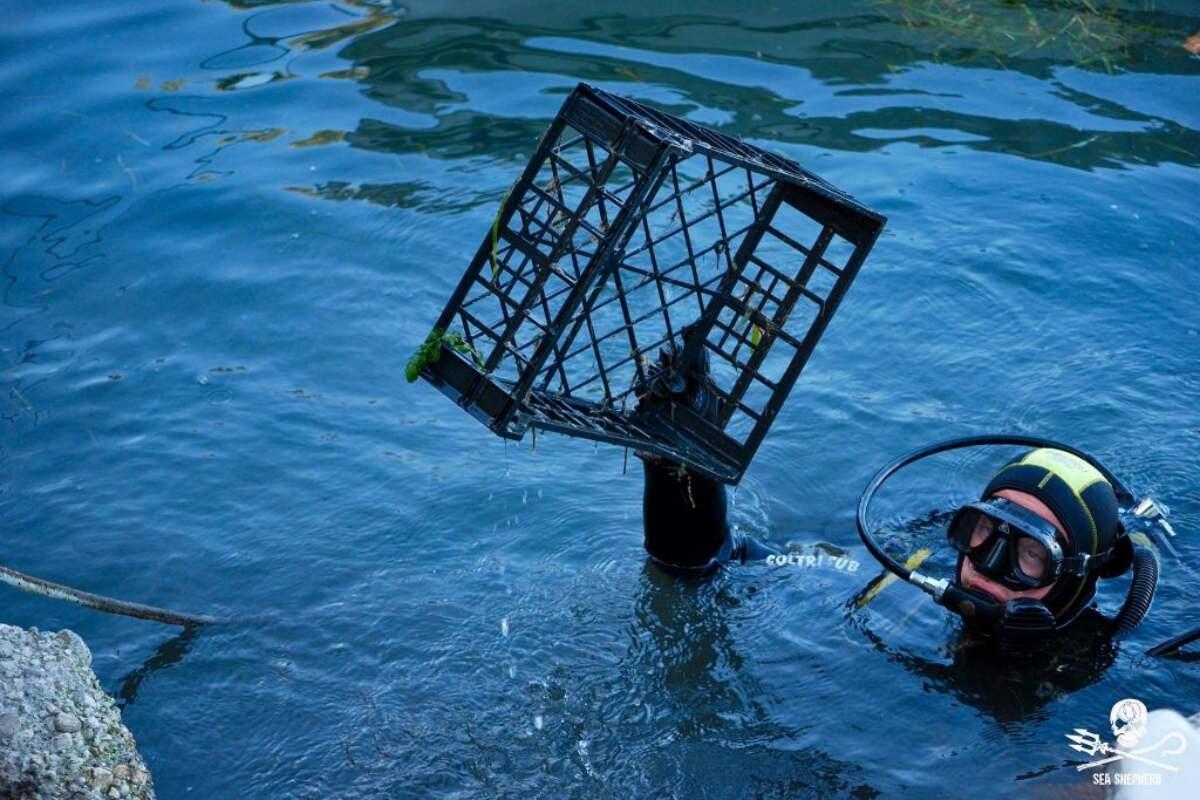
This is the quantity estimated by WWF Bergamo Brescia: 25 tonnes collected from the lake between 2022 and 2023. Special waste, including hazardous waste such as 1.8 tonnes of tyres and the 9 quintals of lead batteries, plastics of all kinds, ferrous waste, inert waste, glass, cans, fishing nets, among them also toilets, bar chairs, road signs, shopping trolleys and many other objects that have reached the bottom due to vandalism and incivility.
"Report calculated," explains Zanollo, "on data collected by the various organisations involved in the recoveries, such as the numerous underwater associations, but also people/citizens who love diving, always supported by volunteers on land who help in the recovery and separation operations. Obviously this is an estimate based on the type of material, no amount has been weighed: when it is recovered, part of it goes directly to the landfill and unfortunately (a sore point) is not separated as it is dirty and therefore cannot be sorted.
The estimate was calculated on the basis of the quantity and type of waste collected and dumped on dry land at the end of the event: an average tyre weighs 12 kg, an average battery weighs 17 kg, a glass bottle 500 gr.
"The importance of volunteer work in this case," the WWF representative continues, "is invaluable given that there is no organisation or company that takes care of the maintenance and cleaning of the seabed. If it weren't for recreational divers and, above all, volunteers, we would have the seabed full of rubbish. Divers who have devoted endless hours and energy to try to improve the quality of the lake ecosystem, so attacked by man on all fronts. Divers combine their passion for diving with good civic sense, striving to keep our waters, these precious environments of ours, lakes, rivers and seas clean and thus also guarantee a regeneration of the ecosystem that otherwise risks being poisoned".
Zanollo also thanks the Coast Guard for "their precious support and total availability to guarantee safety during all the operations carried out by the divers".
Submerged dumps in the seas
Zanollo continues: 'Studies indicate that waste is increasing on the seabed around the world: in some cases its density is even comparable to that of large landfills on land. According to experts, this trend is set to continue, so much so that within the next 30 years the volume of marine waste could exceed three billion tonnes.
In Lake Garda this is fortunately not the case. The presence and arrival of macro waste is not so serious and the problem can be improved by first of all adapting the sewage systems of the municipalities that still have a large percentage of unseparated water. It would also be easier to pay attention not to disperse fishing waste, plastic waste such as floats, fragments or whole crates that are used to contain the catch. Large-scale fishing with nets on Lake Garda is fortunately not so 'unsustainable' for the time being'.
The WWF representative concludes: "An important fact emerges from the latest collections of this year 2023, that of a greater quantity of 'dated' waste, which has been lying on the seabed for some time. A signal that tells us that today there is more attention and sensitivity".
Read the full article on: https://www.gardapost.it/2023/12/12/wwf-25-tonnellate-di-rifiuti-recuperate-dal-garda-tra-il-2022-e-il-2023/
Previous