All that glitters is not green. How to recognise (and counteract) green window dressing
17 December 2024
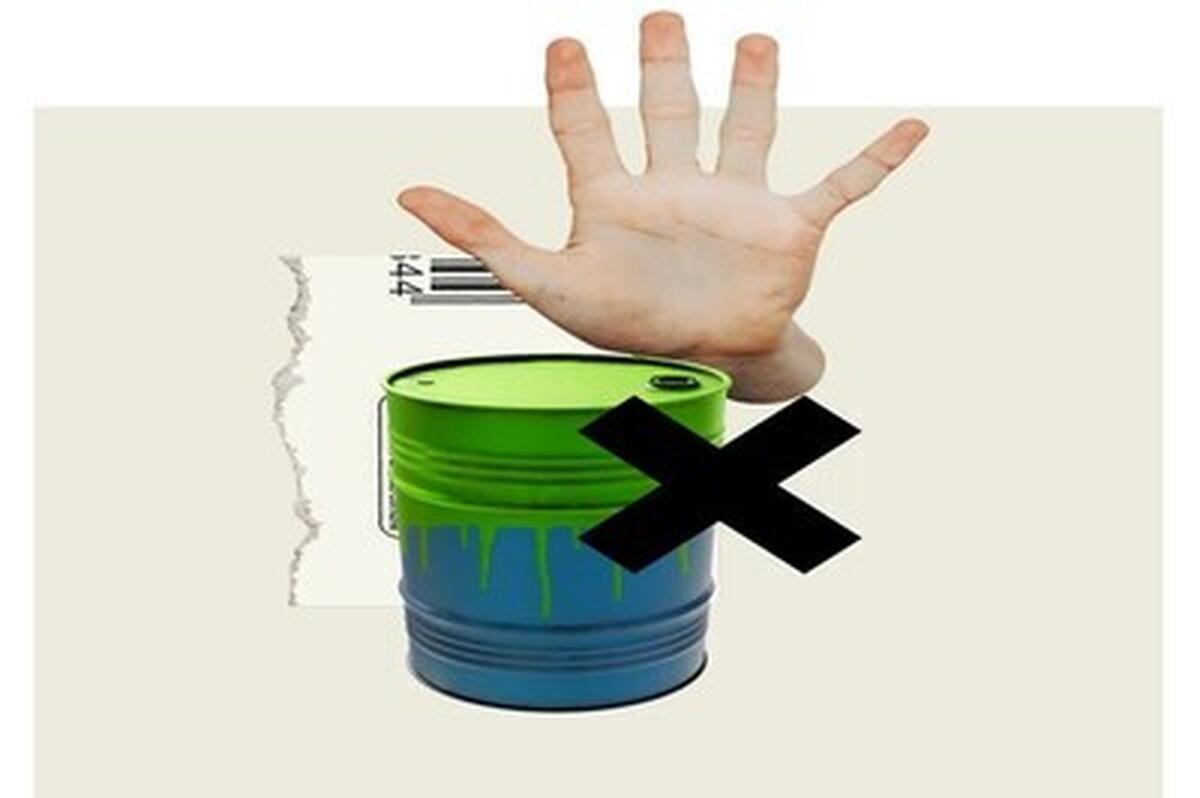
The introduction of environmental labelling for packaging in 2020 marked an epoch-making turning point for the development of recycling and separate waste collection. Four years later, another measure seems destined to incisively change our relationship with sustainability, particularly in terms of combating greenwashing, i.e. the misleading commercial practices that companies or other organisations adopt to convey a falsely positive image of themselves from an environmental point of view.
The new European Directives
These are the new Directive 2024/825/EU, ‘Empowering consumers for the green transition’, which was published last March, and the so-called Green Claims Directive, which is still in the approval phase and, if confirmed, will supplement certain provisions of 2024/825. The aim of these interventions, strongly desired at EU level, is to consolidate previous regulations and shed new light on the terminology used by companies to talk about environmental action. ‘Eco’, ‘green’, ‘sustainable’, ‘environmentally friendly’, in fact, are terms now familiar and widely used in our daily lives. We find them on the packaging of many of the products we routinely buy. Yet their use is not always associated with verifiable corporate environmental practices and, as a result, consumers are not properly informed about the goods they purchase. Directive 2024/825/EU and its ‘appendix’ on green claims aim to counter this. How? By outlawing misleading, unsubstantiated and deceptive environmental claims to ensure that every environmental claim reflects a real commitment on the part of companies. This, on the one hand, allows consumers to be better protected and, on the other hand, serious companies to stand out as such, thus promoting a truly transparent and responsible ecological transition.
Obligations and bans
New legislation to counter so-called ‘greenwashing’ will become effective shortly. Directive 2024/825, which was approved in March 2024 and will be applicable in Italy from September 2026, clarifies existing regulations and introduces new bans on greenwashing. In parallel, the Green Claims Directive, if approved, will supplement some provisions of 2024/825. The latter lays down two key principles: the first is that claims must be clear, specific, accurate and unambiguous, avoiding misleading consumers. Furthermore, companies must have concrete evidence to support their claims. Some practices, then, are considered misleading by definition and will be prohibited in any case. The legislation recognises that information can be misleading even if it is technically correct, if it is presented in a way that confuses the consumer. For example, the claim ‘produced in compliance with the law’ is misleading because it appears to imply added value, when in fact compliance with the law is an obligation for all products and services. Similarly, claims such as ‘-26% CO2 emissions’ made without specifying the context or calculation methodology will be banned as too general and vague. Self-declared sustainability labels without third-party verification will also be banned, as they do not ensure transparency.
European Ecolabel and Carbon claim
Instead, claims supported by official certifications, such as the European Ecolabel for reduced environmental impact, or clear and specific statements on a single environmental characteristic will be allowed. ‘The paper towels in our bathrooms are made of 100 per cent recycled material’ is one such example.
The Directive also introduces a ban on carbon claims based solely on the purchase of carbon credits, i.e. those claims that indicate a positive or zero impact on the environment of a certain product or service solely by virtue of the fact that it has been purchased to offset emissions, a ‘carbon credit’ for an external activity, e.g. for a reforestation action. Emission reductions will always have to take place within the production chain in order to be considered valid for communication purposes. From the picture so far, it is clear that the changes introduced through the new Directives aim to transform the current landscape of environmental communication in order to make its actors more clear and responsible in their activities.
The Italian situation between lights and shadows
The new regulations are not only useful but necessary, considering that to date many consumers are still confused or uninformed about environmental labels and green claims, as some recent data show. Conai, the National Packaging Consortium, annually monitors the habits and knowledge of Italians on sustainability. The 2024 survey, carried out in cooperation with the Scuola Superiore Sant'Anna in Pisa, shows some progress, but still shows a certain disorientation when it comes to environmental claims made by companies. Despite the fact that 94% of Italians agree that individual action can effectively influence the environment and society, and 90% show a high attitude towards circularity, crucial issues such as the loss of biodiversity still remain underestimated. There is growing interest in durable products, creative recycling and second-hand (40%), simple lifestyles (56%) and local production (86%). With regard to food products, 83% of consumers buy only what is necessary at the time of purchase, while 64% value the use of recycled materials in food packaging. In addition, 90% practice proper waste separation by carefully separating materials and say they reduce food waste.
There is still a long way to go
The purchase decision to buy packaging with environmental characteristics is increasing (+16% from 2020 to 2023 for those with informative environmental characteristics and +12% from 2020 to 2024 for those with physical environmental characteristics). However, only a minority correctly understands the meaning of terms such as ‘recycled’ (50%) or ‘recyclable’ (52%) and both percentages are decreasing compared to 2023.
Again, according to the Conai-Sant'Anna analysis, consumers often fail to recognise misleading claims that violate the bans introduced by Directive 2024/825 and less than 15% of respondents understand the real impact of packaging on the life cycle of the entire product. Only 1-3% of respondents correctly estimate the environmental impact of specific packaging, such as tin cans or plastic bottles. Beliefs about companies practising greenwashing have decreased since 2020 (-6%), but are up slightly since 2022 (+4%). In short, there are still many information challenges ahead and the new Directive has all the credentials to effectively support the green transition. For this to happen, however, immediate action by the whole community is needed. Because while it is true that the European Directive 2024/825 will only be transposed into national law at the end of March 2026, it is important for companies to start approaching its measures right away, adapting to it in a gradual manner to facilitate the transition towards clearer and more transparent communication to the consumer.
Read the full article: https://studio.corriere.it/conai-ls1-non-tutto-green/
Previous