Fishing in Lake Garda: historical value, current situation and perspectives
16 May 2023
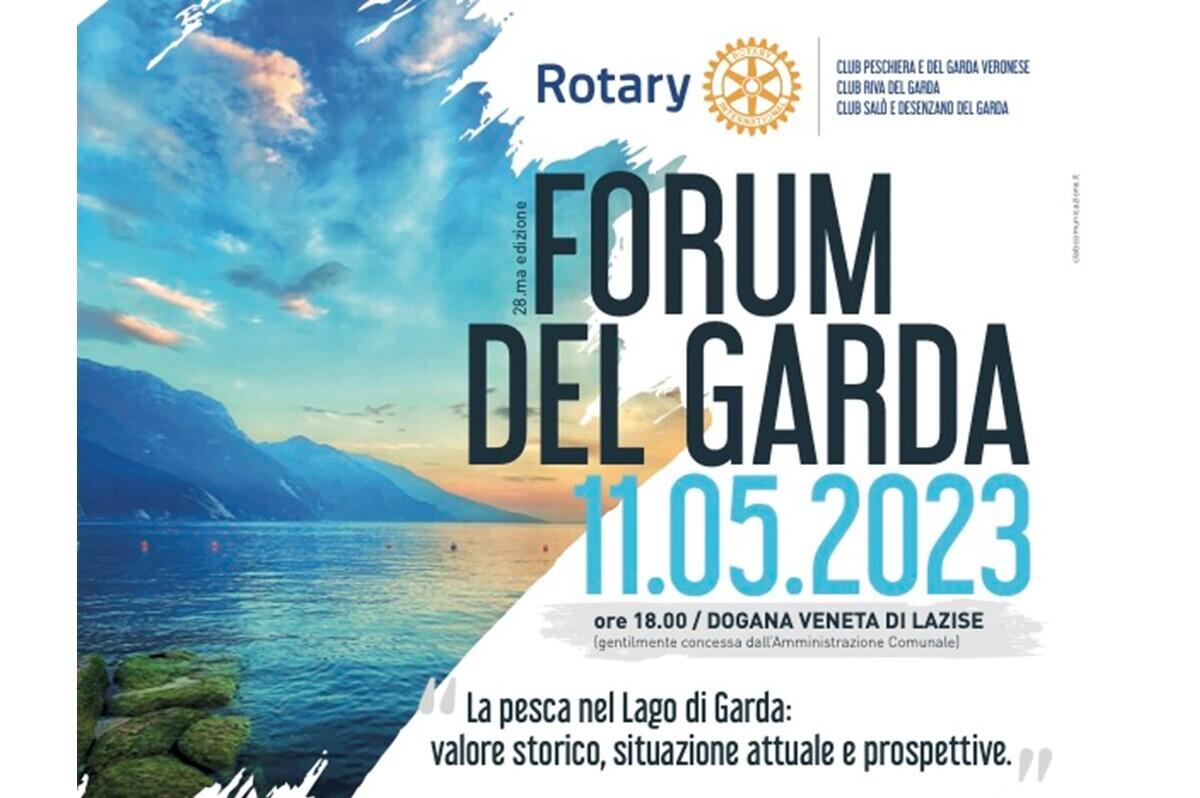
On Thursday, 11 May, the annual forum of the Rotary clubs of Peschiera and Garda Veronese, Riva del Garda, Salò and Desenzano del Garda was held at the Dogana Veneta in Lazise. The theme for this 28th edition was "Fishing in Lake Garda: historical value, current situation and prospects."
Dr. Lucio Ceresa, Secretary General of the Garda Community, gave a speech on the theme: 'The historical value of fishing: civilisation and Garda identity before the increase in tourism that started in the 1950s'; Ivano Confortini, ichthyologist of the Veneto Region, with a speech on the topic: 'The current situation of the various fish species of Lake Garda: their requirements for local use and the repopulation of native species', and Dr. Nico Salmaso of the Edmund Mach Foundation of San Michele all'Adige with a talk on: 'The effects of anthropic and climatic changes on the quality of Lake Garda'. Also present was Elisa De Berti, vice-president of the Veneto Region.
The point of view shared concerned the future of the Lake. Mass tourism and the resulting road and nautical traffic associated with climate change have stressed the lake's balance. Dr. Ivano Confortini well illustrated the dangers for fish species and what solutions to adopt for restocking.
Constant annual fishing is already facing problems due to rising temperatures and falling water levels. But the problems are not only for fishing and maintaining the ecosystem. In fact, Dr. Salmaso's speech pointed out how the excessive anthropisation of the lake has changed the landscape, resulting in a diversification of the animal and plant species present.
Filippo Gavazzoni, vice-president of the Garda Community, moderated the meeting. At the end of the meeting, his comment also went in the direction of protecting the lake. Indeed, it is no longer possible to think about the large numbers during July and August and the consequences that remain when the tourists leave. The Lake lives on tourism and it is thanks to this that it has developed so much over time. On the other hand, it is clear to everyone that the drastic changes due to urbanisation since the 1950s are no longer sustainable.
We are losing some typicality, but solutions to maintain the authenticity of the area are within our reach. The proposed remedies start with the push for deseasonalisation: making the lake live all year round would lead to a balanced distribution of tourists and avoid summer crowds. This is already a good way to have less impact on the environment.
The second good practice concerns flow control. Limiting access would lead to sustainable resource management. However, the issue is very delicate because the accesses to the lake are multiple and managed by different entities. What is needed first of all is an agreement between the various bodies and then a shared decision on the organisation for this control.
Then, by adding a push for the promotion of sustainable practices, one could experience Garda without consuming it. Practices to be promoted would range from traffic, hence preference for alternative means of transport to the car, to the choice of sustainable activities and enhancement of the territory.
Previous