Garda Green Talk 2025: at the Natiia Resort in Lazise the first summit for a more sustainable tourism
13 May 2025
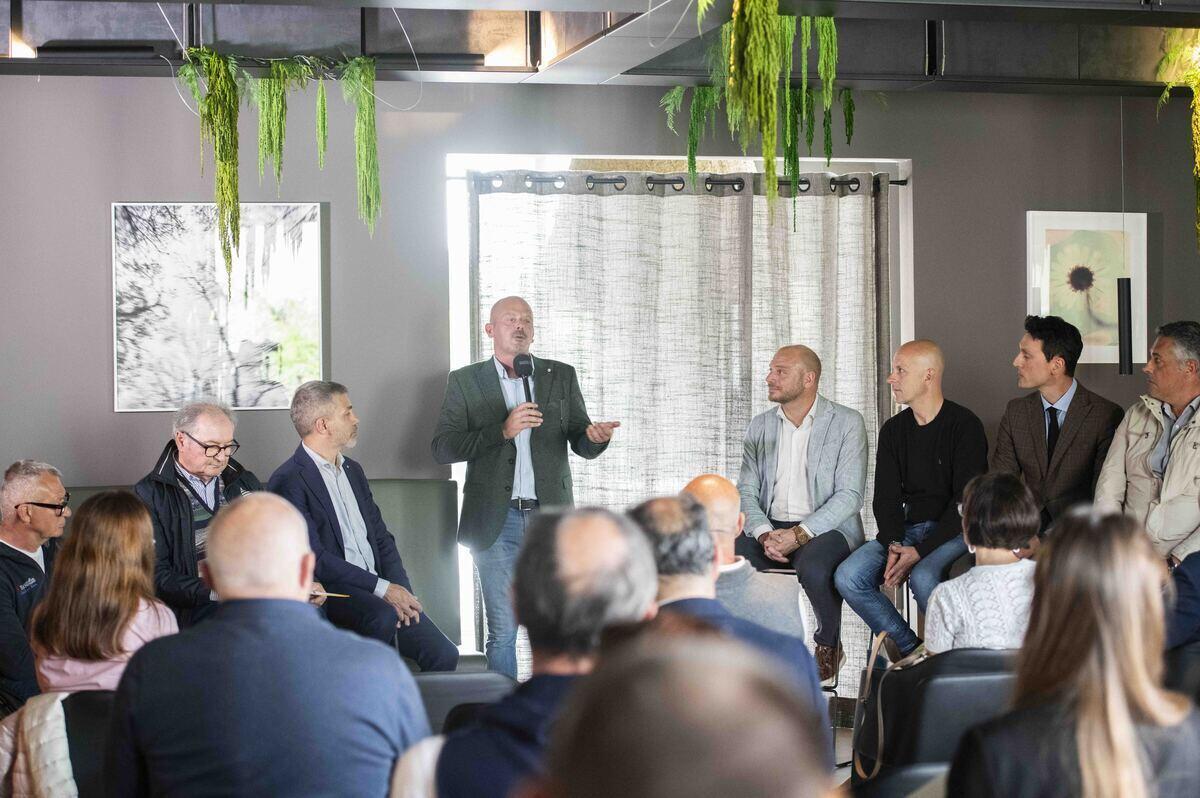
A lake for everyone, to be protected with concrete and shared choices. This is the message that emerged from Garda Green Talk 2025, the first edition of the meeting organised by Garda Green Club, staged on Wednesday 7 May in the evocative setting of the Natiia Resort in Lazise.
A moment of confrontation between tourism companies, local administrations, certification bodies, universities and environmental associations, to discuss the future of Lake Garda and its economies. The challenge is clear: balancing growth and sustainability.
‘The objective of this event is to bring together different actors who live Lake Garda every day,’ explained Davide Fumaneri, director of Garda Green Club. ’We want to build common goals towards greater environmental, social, and cultural sustainability. Planning and dialogue are the pivotal element on which this change can be grafted'.
The conference developed in two parts: the first part was dedicated to companies and sustainability labels, and the second focused on the virtuous experiences of local administrations and associations in the area.
One of the most eagerly awaited speeches was that of Sebastiano Venneri, head of Tourism and Territory at Legambiente Nazionale, who stressed the need for shared governance: ‘It is clear that we are moving towards a situation of overtourism, with overcrowding in certain periods and places. There is no single recipe, but we need a ‘territorial pact’ between administrators, entrepreneurs, and associations. Only in this way can a sustainable tourism development strategy be agreed upon'.
Valuable support comes from the academic world. The Catholic University of Brescia, through the tourism observatory launched with the Garda Community, aims to accompany the ongoing transformations with data and analysis. ‘We want to be an incubator of ideas and research,’ explained Dr. Valerio Corradi, ’The objective is to network with the realities of the territory to offer a useful service to operators, consortia, and tourism networks.
Also for Beatrice Scappini of I-Plus Verona, it is essential that companies understand the evolving framework: ‘There are European regulatory pressures, but also growing demands from the market, tour operators, the MICE sector, and even finance. Sustainability has also become a discriminating criterion for access to certain markets'.
And this is where certifications come in. Luigi Mazzaglia, president of Vireo Srl, a GSTC certifying body, explained: ‘Certifications give credibility to the sustainability declarations of accommodation facilities. They avoid self-declarations and make it possible to speak a common language at international level, guaranteeing seriousness and real commitment'.
Giving concrete evidence of the application of these criteria was Manuela Russo, owner of the Natiia Resort, host structure of the event and certified according to international parameters: ‘Certification should not just be a stamp, but a shared process. By involving the staff, you get ideas and motivation. It is a collective growth path'.
During the morning, Paola Fagioli of Legambiente Nazionale and Luigi Lazzaro of Legambiente Veneto moderated the proceedings. Local institutions were also present, with councillor Enrico Olivieri for the municipality of Lazise, Matteo Gazzi for Malcesine, and the director of Federalberghi Garda Veneto, Mattia Boschelli.
Garda Green Talk 2025 sent out a clear message: sustainable tourism is no longer an option, but a necessity. And it passes through networks, certifications, knowledge and, above all, collaboration.
Read the full article https://veronaeconomia.it/2025/05/10/leggi-notizia/argomenti/green/garda-green-talk-2025-al-natiia-resort-di-lazise-il-primo-summit-per-un-turismo-piu-sostenibile.html
Previous