Goodbye carp, whitefish and trout "In Garda there are no more fish".
15 July 2024
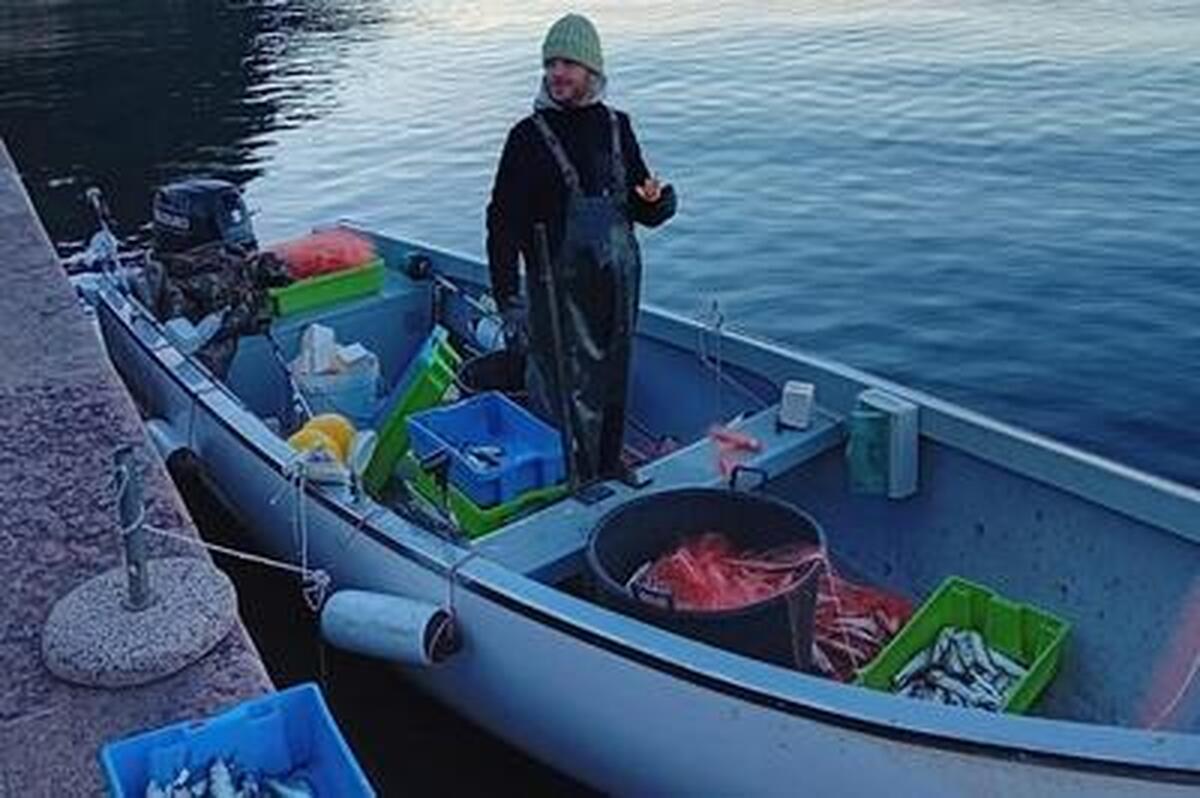
Nicolas is 23 years old and a year and a half ago decided to turn his passion into a job: he opened his VAT number as a professional fisherman in the waters of Lake Garda. In the mid-afternoon he goes down to the harbour, goes out with the boat to Garda and lays out the nets. Then he goes home, sleeps a little, has dinner and around 2am, overalls and cap, returns to the boat to collect the nets. In the morning, at the port, wholesalers, private customers and restaurateurs wait for him and his colleagues to buy the fresh fish of the day. Which by now, however, is in short supply.
"Whitefish, sardines, perch (when it's in season)... there's very little fish to be caught," says Nicolas Valori, from his boat. "If this time last year I came back with 60 to 80 kilos, today I get down to 15 to 20. Too little to satisfy customer demand". And above all to have an income: "80-90 per cent of the income comes from whitefish," continues the young fisherman. "But the females are not put in: they haven't been sown for four years. So if you don't help it, the whitefish diminishes and slowly disappears. Regulations prevent sowing, because this fish is not considered a native species. The sardines in my nets have also decreased drastically'.
On the three banks
Seventy professional fishermen from Verona and more than thirty colleagues from the Brescia side of the lake are experiencing an alarm, and they are even talking about a 90 per cent drop in fish catches. And this is also the case
in the upper Garda area. He knows the phenomenon well, Stefano Ragnolini, former president of the Cooperativa Fra i pescatori, which was closed in November 2022. Ragnolini has reached the end of his career and recently retired. "In forty years of activity, the lake has changed a lot: bleak have disappeared, eels cannot be caught because they are polluted, trout are not to be found, carp are banned and in any case are no longer there, and whitefish have declined. And then there is the worrying phenomenon of the increase in alien species and, in particular, torpedo fish: "There are specimens of a quintal, just think what they can eat," continues Ragnolini. "And then in the past you could fish for eels, for 2-3 months in winter. For bleak, you could use a tub net, with two boats. Today it is forbidden".
The glories of yesteryear
In short, in his 40-year career, fishermen like Ragnolini have seen a lot of developments. Since 2011, eels can no longer be fished because they are contaminated with PCBs. The carp, on the other hand, is now protected because there are only a few specimens left and they cannot be sown: they lay their eggs even at a depth of a hundred metres. And back to the whitefish: "If there are tench, pike and sardines," concludes Ragnolini, "bleak, perch and whitefish are missing from the income. Of the latter I used to come back from fishing with 80 kilos, today I come back with eight, if you reach 20 kilos it is already a wealth. They have dropped by 80 per cent. Sowing must be done again, as it has always been done'. Whitefish are not considered native because a species has to occupy a habitat for at least 500 years to be so. Whereas the fish was sown, in Lake Garda, 'only' after the First World War. A century, in short, is not enough. Even in Malcesine the situation is no better. While on the Brescia shore among the 35 fishermen there is a lot of concern, they are also thinking about changing jobs and in the meantime they are organising a meeting in August among professional fishermen in Manerba.
Read the full article on: https://www.larena.it/territorio-veronese/garda-baldo/lago-garda-pesca-allarme-pescatori-1.10762078
Previous