Lake Garda and Verona. From high season to overtourism the step is short
24 July 2024
By now it is well known to all that the city of Verona and its surroundings, especially Lake Garda, ‘suffer’ from excessive tourist crowding that condenses in the period from March/April (coinciding with Easter) to late October, becoming, in fact, the new high season. This is an issue that has long been discussed by the various players in the area and mayors of tourist resorts, but which to date has not yet reached a concrete solution that can alleviate the anthropic pressure of tourism concentrated in those few months of the year.
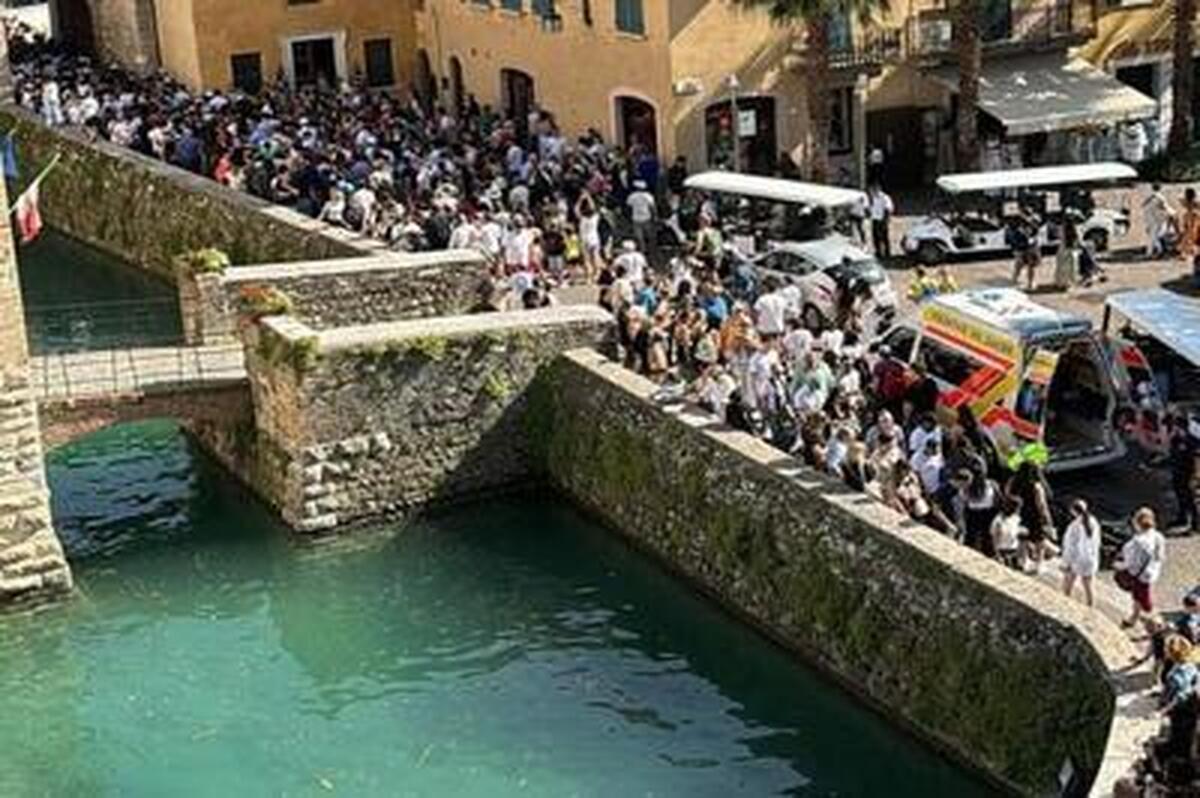
LAKE GARDA. Overtourism has been affecting the Garda area for some time now, and it is even more noticeable because the villages are small. Recently, a journalist from the corriere della sera put himself in the shoes of a tourist visiting Sirmione, the pearl of Lake Garda, on a July afternoon. What he experienced, however, was unpleasant to say the least, also considering the high temperatures reached on that day: a 40-minute queue to find a parking space, crowds of people pouring through the streets of the historic centre, denying the possibility of admiring the marvellous views that the town is used to offering, ice-creams that cost as much as a pizza margherita, and small beaches that look like anthills given the large number of people present. Not to mention the difficulties that emergency vehicles encounter in reaching and assisting those in need, sometimes getting stuck in traffic, not only car traffic but also ‘human’ traffic.
VERONA. Verona is also well aware of the problem of overcrowding. The Councillor in the Municipality for Culture, Tourism and Relations with Unesco, Marta Ugolini, believes that ‘the cooperation of the entire sector is necessary and indispensable to tackle the problem through sustainable projects. There are points that are more sensitive to this issue, such as Juliet's courtyard, which creates quite a few inconveniences with kilometre-long queues in order to access and visit the famous garden. Reservation and entrance fee seems to be the solution that will come into force by the end of the year to remedy the aforementioned problem. Regarding the idea of a closed number in the city with payment of an entrance fee for tourists as Venice is doing (an idea raised by regional councillor Caner), Ugolini is of a different opinion. It would be impossible to apply this model to Verona, since accesses are innumerable and difficult to control and manage in a case like this, and also because they want to leave the status of ‘free and unrestricted citizenship’. Controlling the number of people is useful in conjunction with certain events such as the Christmas markets, but it cannot be the solution. The alternative, therefore, would seem to be, once again, the deseasonalisation of the tourist offer, spreading the flow of tourists over all the months of the year with specific initiatives and packages, and over all the Veronese territories, not only the city and the lake but also Valpolicella, Lessinia, Pianura dei Dogi and Soave- Est Veronese.
In conclusion, the discomfort created by overtourism does not only fall on the tourist who almost certainly will not be able to fully enjoy all the beauties that Verona and Lake Garda can offer, but also and above all on the inhabitants, on the people who live in these wonderful places, and who every summer are swamped and overwhelmed by waves of holidaymakers who inevitably modify and affect their quality of life, also affecting that of the services offered.
The problem is noticed and everyone is aware of it: there are those who would be in favour of a closed number, as is happening in Venice, those who believe that it is not the most suitable solution, and those who would find the answer in the deseasonalisation of the offer. Incentivising tourism even in the months of low attendance as a solution to overtourism, seems a challenge, far from being won, however.
Previous