Media alarmism about the catfish: the “monster” of Lake Garda
17 March 2026
For years, local and national media have bombarded readers with alarming headlines: “Alarm: catfish in Lake Garda,” “The catfish is wiping out fish populations,” “Dozens filmed, it sits at the top of the food chain.” Videos of enormous catfish (Silurus glanis) being caught or found floating dead, interviews with desperate fishermen, calls for special “catfish-catching” nets. There is talk of a crisis in professional fishing (whitefish catches dropping from 56,000 to 12,000 kg in just a few years), of a predator with no enemies, of an irreversible threat to the ecosystem. In 2025–2026, the refrain is constant: the catfish is public enemy number one of Lake Garda.
The catfish is certainly a formidable predator that should be controlled, but let’s take a step back and look at scientific data, not clicks. Today, Lake Garda hosts between 42 and 45 alien species (according to studies by the University of Trento and regional reports), including fish, invertebrates, plants, and algae. The catfish is undoubtedly one of the most widespread non-native fish and has a significant impact on commercially important fish species, but it is not even on the list of the most invasive species according to experts who have monitored the lake for decades.
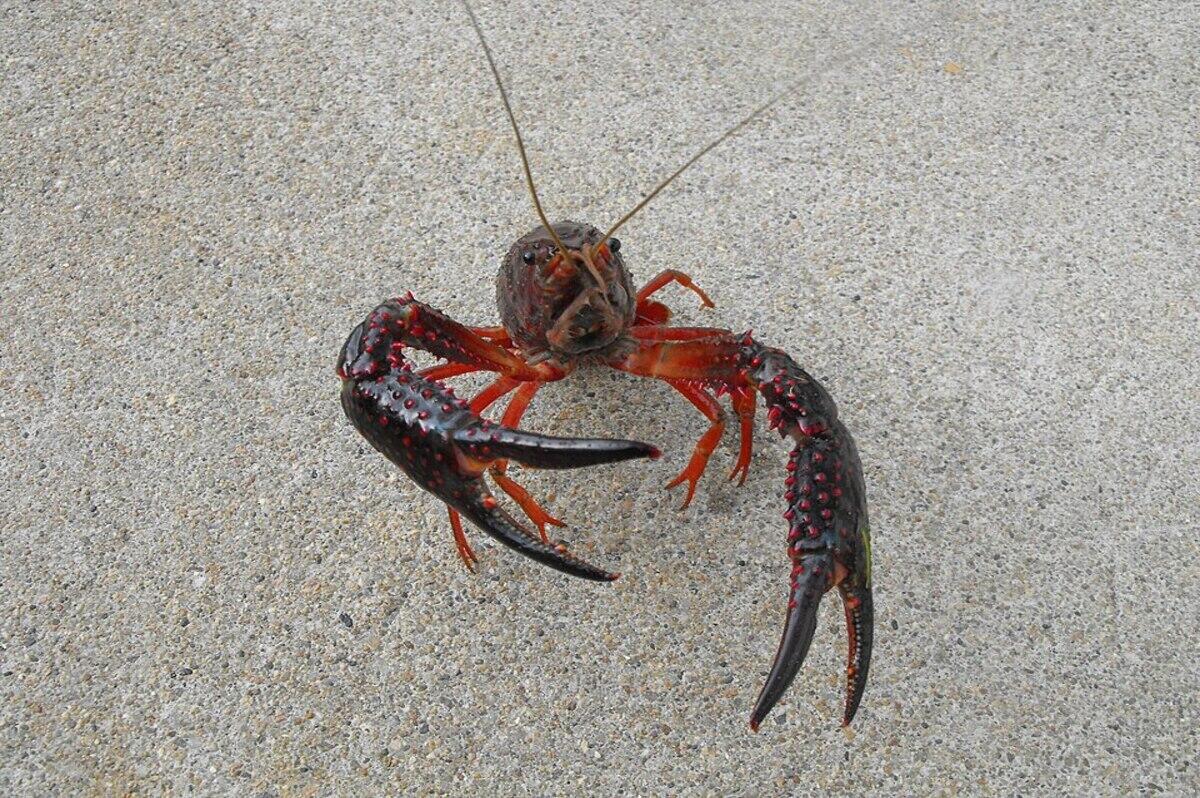
The real “silent killer,” present for over thirty years and listed among the 100 most dangerous invasive species in the world (DAISIE and IUCN), is the Louisiana red crayfish (Procambarus clarkii). This crustacean, included in the European list of invasive alien species of Union concern (EU Regulation 1143/2014), is an extremely voracious generalist: it eats everything (invertebrates, plants, fish eggs, detritus), digs burrows that destabilize banks, spreads crayfish plague (Aphanomyces astaci), which has already wiped out native crayfish populations, and reproduces at astonishing rates. It is especially widespread in the southern part of the lake, where it reaches very high densities.
Yet, when in September 2024 hundreds of these red crayfish were washed ashore by a storm surge between Desenzano, Padenghe, and Moniga, the news was dismissed in just a few lines: “Invasion of alien crayfish on the beaches, but WWF reassures: nothing new, it has been known for decades.” No bold headlines, no prime-time TV coverage, no dedicated regional emergency plan.
Why this disparity? Simple: the catfish is photogenic. It is large, frightening, evokes the “lake monster.” A two-meter, 80-kilo catfish sells newspapers and generates views. The Louisiana crayfish, on the other hand, is small, unattractive, “creeping”: it does not scare tourists, nor does it create the image of immediate danger for swimmers or dogs (even though the catfish is often accused of this without concrete evidence of attacks). The result? Media alarmism focused on the catfish, near-total silence on the killer crayfish.
Science, however, has no doubts. In the most authoritative studies on Lake Garda (including Francesca Ciutti’s 2017 work), the species identified as “most invasive” are precisely invertebrates: the killer shrimp Dikerogammarus villosus, Asian clams Corbicula, the American crayfish Orconectes limosus… and, fully, Procambarus clarkii. The catfish appears among widespread fish, but not among the top invaders. Yet today, regional plans and public funds focus almost exclusively on the catfish, while the red crayfish continues to proliferate undisturbed, with natural predators (including the catfish itself) unable to contain it.
The paradox is clear: alarmism is created around a visible predator, while a species that is silently reshaping the lake’s structure—digging, altering the bottom, spreading disease, competing with all forms of life—is ignored.
It is time to stop this “catfish media panic” and address the problem with scientific seriousness. What is needed are proper monitoring, integrated control plans for all alien species (not just those that generate attention), and accurate public information. Lake Garda does not need front-page monsters: it needs truth. And the truth is that the Louisiana crayfish, for decades at the top of the most invasive species in Lake Garda, finally deserves the attention it has been denied—before it is too late for it as well.
Read the article: https://www.facebook.com/story.php?story_fbid=122180705768475475&id=61564264263516&mibextid=wwXIfr&rdid=QLEswt3P6QxENXTt#
Previous