Olive Groves at Risk of Abandonment: Proposal to Use Tourist Tax Revenue to Support Them
08 June 2026
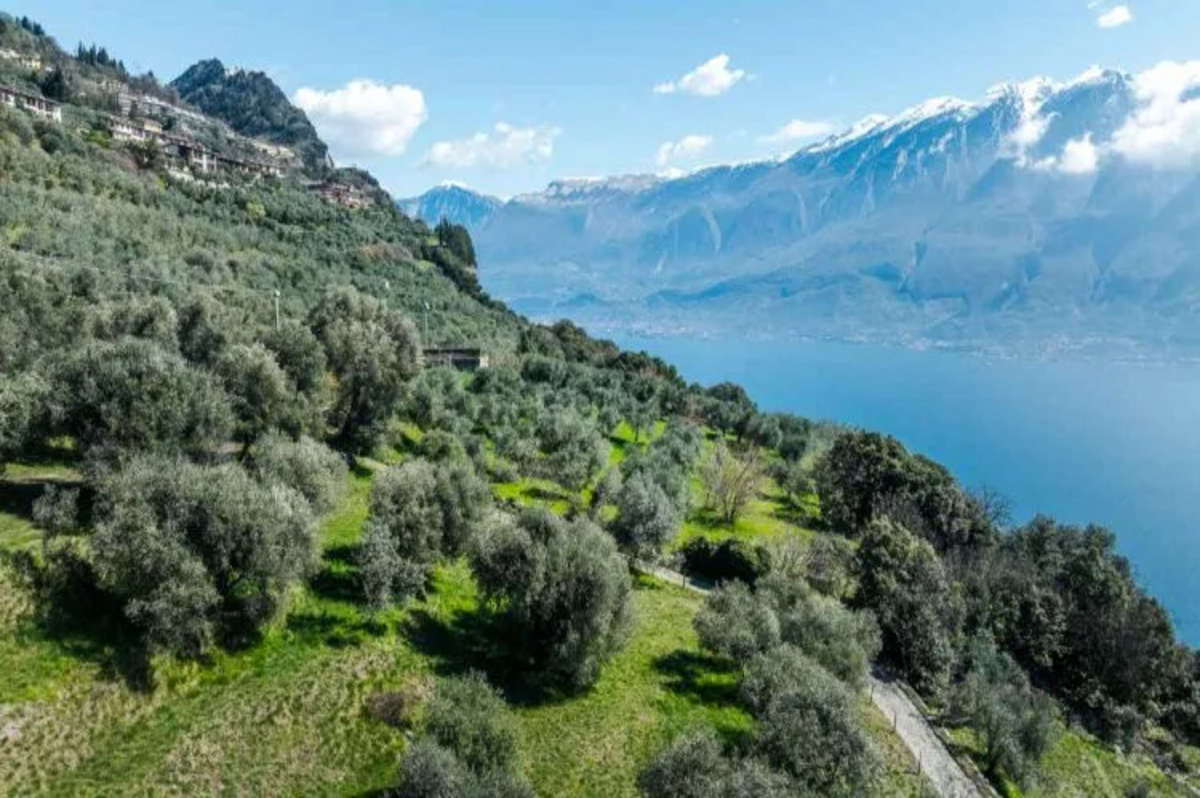
A share of the tourist tax should be used to support olive cultivation, a cornerstone of the Upper Garda landscape, regarded as a public asset that generates economic benefits through tourism. This proposal has been put forward by a group of olive growers, who write the following.
“On May 8, an important and necessary meeting on olive cultivation in the Brescia Upper Garda area was held at the A. Castellani multifunctional hall in Gargnano. To a large extent, the condition of olive growing reflects the condition of the olive groves themselves: increasingly neglected, if not completely abandoned; often even mistreated whenever their maintenance is entrusted to self-proclaimed chainsaw professionals rather than skilled olive growers. This also applies to publicly owned olive groves, which could and should set a positive example.
Olive Cultivation No Longer Guarantees Reliable Income
Unfortunately, olive trees are becoming less attractive due to increasingly erratic yields caused by numerous pests whose spread is favored by climate change. Much of the local olive sector now survives thanks to the efforts of ‘ordinary’ enthusiasts rather than professionals—olive lovers who, out of passion, become olive growers, or rather ‘olive custodians.’
Caring for olive trees, especially in mountainous areas, now offers only one certainty: a great deal of work, without any reasonable expectation of income. In the past, people used to say in dialect, ‘It will survive only until the old people are gone.’ After many warning signs, the time ‘without the old people’ seems finally to have arrived.
The Absence of Public Administration
Despite repeated appeals from various quarters, local municipal administrations have so far lacked either the willingness or the strength to adopt a coordinated district-wide policy to address this situation. Perhaps this is because olive groves have been viewed not as agricultural and natural resources, but as obstacles to land development projects that brought revenue into municipal coffers through building permits… pecunia non olet (“money does not stink”)… pecunia non oleum (“money is not olive oil”).
The conference also confirmed the important role played by olive custodians in preserving the olive groves that shape the Upper Garda landscape—a landscape heavily used for tourism marketing purposes but scarcely protected directly by the tourism sector itself. Buying olive oil elsewhere when local trees produce nothing certainly helps part of the supply chain, but it does nothing to support Garda olive cultivation.
The future of olive cultivation in the Brescia Upper Garda area will therefore depend on the direct involvement of all those engaged in “non-professional” olive growing who are already actively committed to preserving this activity.
Certainly not those hobbyists who remember their trees only in years when they bear fruit, nor those gardeners who approach olive trees as if they were just another maintenance problem.
Even representatives of the “intensive” production sector, while an essential component of any comprehensive vision for olive cultivation, represent a significant but still minority portion of the overall olive heritage of the Brescia Upper Garda region.
Small-Scale Projects Against Abandonment
To reactivate dormant productive assets, it is essential first and foremost to give a voice to all those olive custodians who, regardless of the form in which they carry out their activities, invest their physical, financial, and mental resources every day in preserving olive cultivation in Upper Garda and maintaining what still resists abandonment.
As an example, thanks to the collaboration of Mattia Omezzoli from Vivai Omezzoli in Riva, projects are underway to reproduce and replant local olive varieties taken from ancient centuries-old trees.
For this reason, we believe it is important that representatives of those we have defined as olive custodians also have a seat at the technical working groups established under the signed protocol.
What else can be done to support this declining olive-growing sector?
The Meeting in Gargnano
The meeting was opened by Franceschino Risatti, Mayor of Limone and President of the Upper Garda Bresciano Mountain Community and Park Authority. He assumed responsibility for developing a shared action plan together with Aipol and GAL, with whom a memorandum of understanding has been signed to find solutions to the issues that prompted the gathering.
The speakers outlined the history of olive groves and the protection mechanisms they enjoy, while also highlighting the many challenges facing the sector: from plant diseases to the lack of interest among younger generations in pursuing olive cultivation, which offers no guaranteed income unlike other agricultural occupations.
However, among the challenges discussed, there was no explicit mention of the lack of a strong common vision capable of mobilizing energy and funding—including public funding—to support this form of “heroic” agriculture, which contributes so much to preserving the Garda landscape that is so appreciated abroad and so undervalued at home.
We hope that this conference will be remembered as the moment that led to overcoming this situation, perhaps beginning with the proposal advanced by the final speaker.
Dr. Morten of the E. Mach Foundation highlighted several key aspects of olive cultivation:
- The significant nutraceutical value of the extra virgin olive oil produced: not only an excellent food and seasoning, but also a genuine natural medicine;
- The richness of the vegetation and biodiversity preserved by olive groves, providing another reason for their public protection and conservation;
- The importance of preserving the landscape as a public asset that generates economic benefits through tourism.
Funding Through the Tourist Tax?
In light of these facts, he proposed securing the resources needed to support olive trees and the landscape by drawing funds from the tourist tax collected by municipalities.
In short: fewer fireworks and better-maintained landscapes. Instead of funding unnecessary events, financial support should be directed toward serious projects carried out by genuinely committed individuals.
We hope that this proposal, already raised in the past, will finally be embraced in order to prevent the abandonment of our centuries-old olive trees and provide young people with an incentive to continue preserving the immense heritage we inherited from our ancestors and have a duty to safeguard for the benefit of our grandchildren.
To contribute to this effort, we are ready to do our part.”
Signed: A Group of Olive Custodians
Read the article: https://www.gardapost.it/2026/06/07/oliveti-a-rischio-abbandono-la-proposta-usare-limposta-di-soggiorno-per-sostenerli/
Previous