Tourism at any cost? No, thanks!
28 May 2025
This is the communiqué issued by the Coordinamento per la tutela dell'Ambiente Alto Garda e Ledro, which brings together under a single acronym numerous environmental associations active in the area.
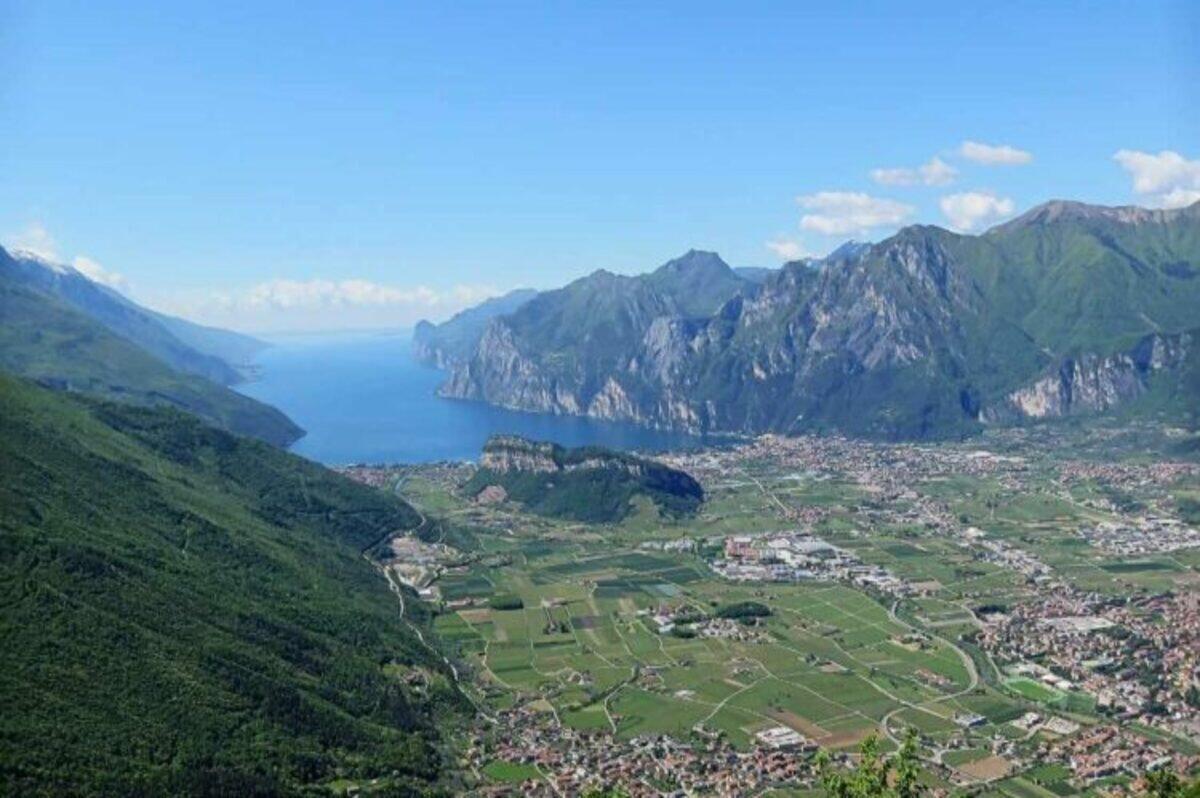
‘Garda Dolomiti S.P.A: between tourist promotion, territory management and sustainability statements. Following the report that appeared in the press on the recent annual meeting of Garda Dolomiti, the Alto Garda and Ledro Environmental Coordination takes the opportunity to express some considerations.
Generally speaking, there are inconsistencies between the public statements of President Rigatti concerning the concept of sustainability and the strategies that Garda Dolomiti actually carries out. These, in our opinion, often conflict with the principles of environmental, social, economic and welfare sustainability of the local population.
In spite of the statements, we witness, in deeds and declarations, the support of projects of the Garda cycle-pedestrian path or the dreaded construction of a golf course in Nago, the transformation of historical paths into extensive routes suitable for cyclists, the uncontrolled expansion of climbing routes on the cliffs, fireworks and large events that in every respect are neither environmentally nor socially sustainable. Ours are not prejudiced positions, nor are they fundamentalist, nor do they oppose everything that comes from the political and economic world in terms of land development. But the preciousness and delicacy of our territory must be taken into account.
Tourism business the only compass for strategic choices
The Associations' task is to keep a high level of attention on the risks that certain decisions, taken in the name of development, entail, to detect critical issues, to propose concrete and truly sustainable solutions, and to be the spokesperson for the territory as a subject with rights.
It is desirable that public administrators and competent bodies listen to and dialogue with associations, researchers and experts in order to arrive at balanced choices aimed at the wellbeing of the environment and people.
Garda Dolomiti invests in research and commissions studies on sustainability, but is it able to take into account the results and suggestions derived from them? The principles of sustainable tourism include both the need to take into account the opinions of the associations and citizens that make up the core of the community, and their participation and involvement in the process that leads to political choices.
We believe it is absolutely wrong and counterproductive for the choices and decisions of only one part of the stakeholders in the life of our community to prevail. Collaboration, which is right and proper, with economic categories and municipalities is often mentioned, but it is forgotten that at discussion meetings, associations that care about sustainability have no way of participating in order to express their positions. It is not even easy to take note in transparency of the contents that are discussed at these meetings, nor of the decisions taken, since nothing is then reported to the media. Through the actions and words of its president, it seems to us that Garda Dolomiti has placed itself at the centre of the social and economic and territorial organisation of our Community, making up for the latitude of the municipalities; this is not the case, Garda Dolomiti is also simply a public-private SPA, a stakeholder on a par with others.
An entrepreneurial land management policy
Land management policy thus runs the risk of becoming entrepreneurial in nature. And in an entrepreneurial logic, is land preservation contemplated? Are we sure that the public and private sectors are currently investing resources in the preservation of the land, the environment and the socio-cultural structure to guarantee tourists a pleasant and continuous experience in the future?
It is also an anomaly that the revenue from the tourist tax is entrusted to Garda Dolomiti instead of the municipalities. According to the objectives laid down in the establishment of this tax, the proceeds should be used to make up the higher costs due to the presence of tourists and to improve the environment for the benefit of all, tourists and residents alike.
How and by whom are these revenues managed and controlled? Shouldn't this management be controlled by a public body? A tourist promotion organisation that has tourism development in its mission and statute cannot assume a role of governance of the territory that is rather the responsibility of democratically elected public administrators.
Finding a meeting point between safeguarding the tourism sector and the landscape is not easy because we start from very different visions.
Tourism and unsustainable human load
Among the statements of President Rigatti we find: "tourism is a source of value and prestige for our locality" and it is a point that we agree with; in our opinion, development is not linked to the concreting of the territory or to an increase in building volumes or to monstrous constructions or to an uncontrolled and reckless anthropization of the territory that heavily impact the beauty of the places.
We believe that prestige and value pass through the maintenance of beauty and livability, otherwise the quality tourist will turn to new destinations and we will begin to observe more and more the prevalence of a tourist who is a consumer of the territory to be exploited for his own enjoyment and who has little respect for the rights of the locals.
The balance between those who reside and those who come on holiday is not at all harmonious. The human load impacts on safety, mobility, infrastructure, hospital services, waste disposal.
The increased prices of real estate and consumer goods, excessive traffic, the impossibility of finding long-term rentals, aggravated by the lack of regulation of short-term rentals, lead to a risk of emigration of residents to other places and empty the community of its most precious elements, the young.
All this leads to inevitable consequences that produce negative repercussions on the local community, create social conflicts between residents and tourists, empty the place of its history and culture. A perception of "invasion" of the territory is created in the resident citizen that fuels social conflicts. For the tourist to be interested in the territory it is necessary that he be guided and educated, informed and sensitized.
The initiative of the information leaflets last summer was, in fact, aimed at creating awareness and involving the guest in pursuing the same objectives of being able to frequent an environment enjoyable from all points of view.
The promotion of an already saturated territory
We are witnessing a massive marketing operation, certainly necessary, but aimed at attracting an ever-increasing number of tourists, without properly evaluating the short, medium and long-term consequences, taking into account the particular sensitivity of our environment and the risk of an emptying of the values of the resident community.
The problem of tourist accommodation, for example, is the result of indiscriminate promotion that does not take into account its consequences; the administrative and legal gaps in this regard must be managed only by the competent bodies, the political ones: mayors, municipal councils and Valley Communities first and foremost, not by those who have a conflict of interest and were its promoters.
The organization of large events to encourage the deseasonalization of tourism is not a solution, but brings back to the territory the same critical issues that citizens already endure during the summer, even in the low season.
We believe, rather, that to promote deseasonalization, a tourist potential dedicated to tranquility, enjoyment of cultural, natural, landscape, anthropological, artistic aspects and historical-cultural trekking should be discovered. Residents' rights
In a sustainable tourism perspective, it is necessary to take into account the so-called "residents' rights", among which we mention the ability to use the places, not to see one's private property invaded by improper parking of cars or campers, the right to rent or buy a house or to be able to move around the area with one's own vehicle, etc.
It must be acknowledged that, where there is a massive presence of tourists, the right to respect for one's own territory of those who live in that place is threatened and sometimes produces strong protests, dictated by exasperation.
The Coordination does not take a position "against" tourism and recognizes its value and the well-being that it has brought to the community, but the principles of "quality, sustainability and involvement" are not applied, which remain, at the moment, words without real content.
There are not two separate worlds, there is only one and the Coordination has as its founding purpose that of protecting it. We are certain that many will share our observations, because we think that the beautiful territory in which we live, we, the citizens, the tourists, institutions, it's the same for everyone, let's keep it that way!
The elements of concern: can the tourist be forgiven for everything?
Finally, we would like to share with you some elements of concern:
• Concern is expressed about the management methods of the “maintenance” of the current trail network, by Garda Dolomiti srl, which often produces substantial changes to the previous conformations of the trails. We also wonder whether the aforementioned company is subject to the obligation to present a regular project and any necessary authorizations for the execution of these works, which seems appropriate, since they often intervene massively with the demolition of boulders and cutting of trees.
• The trails are sometimes “fixed” by the Garda Dolomiti rangers with methods apparently not dictated by planning and professionalism, the renovations sometimes become extensions that distort the historical path and use methods that do not allow them to last over time (gravel that will be washed away by the rain, instead of more durable stone paving). The works of arrangement of paths and cliffs are often not planned and brought to the attention of the bodies responsible for the territory (Forestry, Superintendence of historical and cultural heritage, Landscape Heritage office, etc.), nor are the Associations that are in the territory involved, often bearers of ancient knowledge.
• The Monte Baldo Park is famous for its floral biodiversity, often you meet bikers who ride along historic paths, often causing damage to the pavement and creating conflicts and danger for walkers.
• Sometimes bikers do not take into account the prohibitions (Monte Brione, Daine trenches, Nago-Torbole state road, Torbole lakeside, one-way streets) that serve to preserve the natural or historical elements of the territory.
• Protected areas should be protected from the passage of bikers and from the indiscriminate bolting of climbers.
• Many residents have the perception that the local police are not in control of the situation (the Commander has publicly declared that the lack of personnel does not allow for the necessary checks and that fines are not paid by foreigners) and that tourists can be forgiven for everything
• Illegal camping phenomena, even in privately owned places, are frequent, but the local police rarely provide sanctions, fueling the feeling that tourists are treated more favorably than residents.
• There is no sustainable road network project; the proposed solutions such as Bus and Go, although praiseworthy, are only palliative. What is missing is a long-term, far-reaching vision of a rail link (metro) between Rovereto and Alto Garda, peripheral parking lots and shuttle buses to the historic centers. In Riva, parking lots continue to be built on the lake shore.
• Are the decisions of an entrepreneurial policy that decides to consume agricultural land in favor of the construction of five-star hotels what residents and tourists really want?
• Does the indiscriminate increase in prices, as a tourist area, take into account the fact that this affects the entire population, especially those with low incomes?
• Sport climbing, which has no regulation in Trentino, is causing damage to the environment of the cliffs, which often hosts species protected by law (see the cliffs of Oltrezengol in Nago, an area of environmental and historical value) and creates an anthropic load, fueled by advertising on social media, which is no longer sustainable; often the climber or the bolter, more or less consciously, causes damage to historical sites (relics from the First World War and rock carvings) and also to the environment.
• Sometimes we witness an indiscriminate and unjustified cutting of trees. Are we sure that all this will not lead tourists to choose other places for their holidays in the future?
Are we willing – concludes the Coordination for the Protection of the Alto Garda and Ledro Environment – to abandon the logic of quantity in favor of that of quality? What places do we want to leave as a legacy to our children? Do we finally want to invest in the protection of our waters? Are we encouraging tourists to learn about local history and culture, in order to foster attachment, satisfaction and an emotional bond with the vacation spot?
Read the full article https://www.gardapost.it/2025/05/28/contro-il-turismo-ad-ogni-costo/?fbclid=IwY2xjawKk_cRleHRuA2FlbQIxMQBicmlkETB5dXg3dk54U1FrY1RVb1VvAR5G50RdZaULFx1JH0ra9mBJkxeZFBfInsFJIdHy-y55XESYIXnMWbj8fz9svA_aem_tBOAh7xGvYm3AXKe4tTpAA
Previous